Iran goes dark: Regime cuts internet amid protests, unrest
January 9, 2026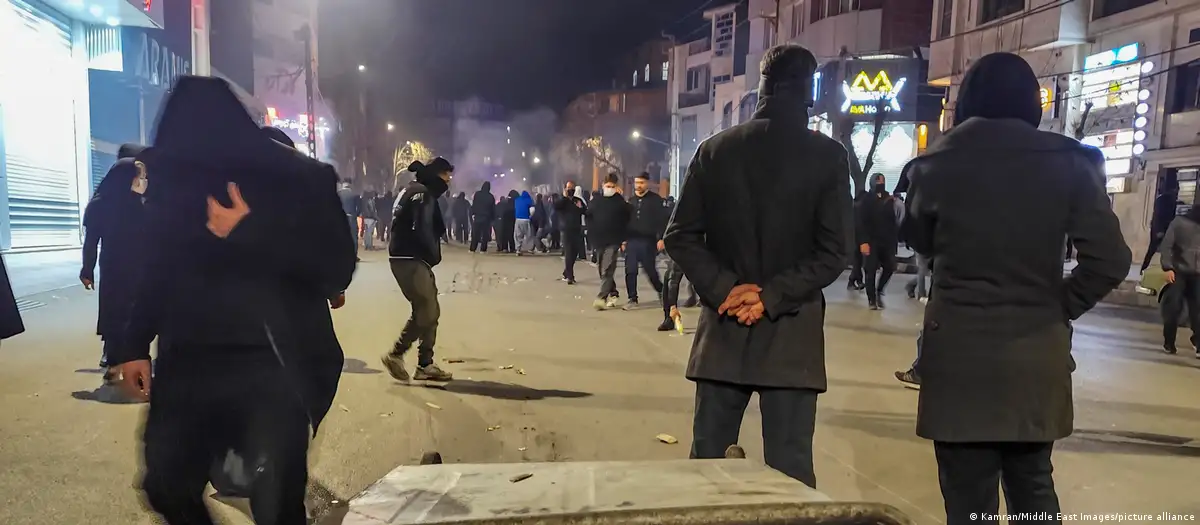
The regime seems to have barred internet access in Iran during the latest wave of protests. Texting and mobile data are down, cellular networks are severely limited, and even accessing the internet via Starlink satellites seems to be affected.
"The disruption of all communications, especially Starlink network, are massive," Amir Rashidi, director of digital rights and security at Miaan Group, an activist NGO focusing on Iran, the Middle East and North Africa, told DW.
"This is a matter of survival for the regime," Rashidi said.
He said Iran's authorities could maintain the blackout for a long time.
Exiled prince Pahlavi in center of protests
Before the internet disruption, videos posted online showed people taking to the streets all over Iran.
"We just want to go for a walk" was a message many of the protesters posted on social media or in private chats.
A call to demonstrate against the regime came from Iranian Prince Reza Pahlavi, who has been living in exile in the United States since 1979. Pahlavi is the son of the last shah of Iran, Mohammad Reza Pahlavi. In an Instagram video, the prince urged the Iranian people to come out into the streets or their balconies on Thursday and Friday and chant slogans against the regime.
"Based on your response, I will announce the next calls to action," the 65-year-old prince said.
The protests in Iran have been going on since December 28, but Pahlavi's initiative was the first coordinated act of resistance in several days.
The video was viewed more than 80 million times.
Protests: 'Something different'
It remains unclear if protesters want the return of the Iranian monarchy, which would presumably be led by Pahlavi. The average age in Iran is around 33 years, and for most Iranians, the rule of Mohammad Reza Pahlavi is not even a distant memory.
The exiled prince has managed to take advantage of a power vacuum within the opposition. Ever since the 1979 Islamic Revolution, the religious regime has used repression and attacked its opponents while also demonizing any sort of dissent.
Supreme Leader Ayatollah Ali Khamenei and the current Iranian elites have repeatedly crushed anti-regime protest movements in recent decades.
"The international community must not abandon the Iranian protesters," lawyer Marzieh Mohebi told DW. Mohebi was forced to leave Iran after she drew authorities' attention during the "Woman, Life, Freedom" movement of 2022, and is now living in France.
"In my hometown of Mashhad, there was an overwhelming surge of protesters in every part of the city last night," Mohebi said. "The protests changed into something different: It wasn't just the young people taking part, but many families es well. While the internet was still up, there were reports of clashes between protesters and law enforcement."
Khamenei invokes Trump
All communication channels have been cut off. "The shutdown could be an attempt to impose military rule and launch a large-scale massacre," according to Mohebi.
She said the "Iranian people are helpless."
"Their voices are being silenced," she said, "they have no way to communicate."
On Friday, Khamenei criticized the protests, claiming "inciters of unrest" and people working against the state.
"There are also people whose work is destruction," Khamenei said. He added that destruction "would bring joy to the US president," Donald Trump.
Trump says Pahlavi a 'nice person'
Trump has repeatedly threatened Iran, saying the United States could intervene on the behalf of the protesters. On a talk show aired on Thursday, Trump said Iran will "pay hell" if things go wrong.
"I have let them known that if they start killing people — which they tend to do during their riots, they have lots of riots — if they do it, we're going to hit them very hard," Trump said on the The Hugh Hewitt Show podcast.
Trump said the US government was carefully monitoring the situation, and called Iranians "brave."
He called Reza Pahlavi a "nice person," but said he was not sure it would be appropriate for a US president to meet the exiled Iranian prince.
"I think that we should let everybody go out there and see who emerges," Trump said.
This article was originally published in German