Assam: Heat threatens tea crops in famous Indian region
As climate change drives up global temperatures, so too has it caused tea prices to skyrocket. In India, domestic demand is rising, while the nation's share in world trade is slipping.
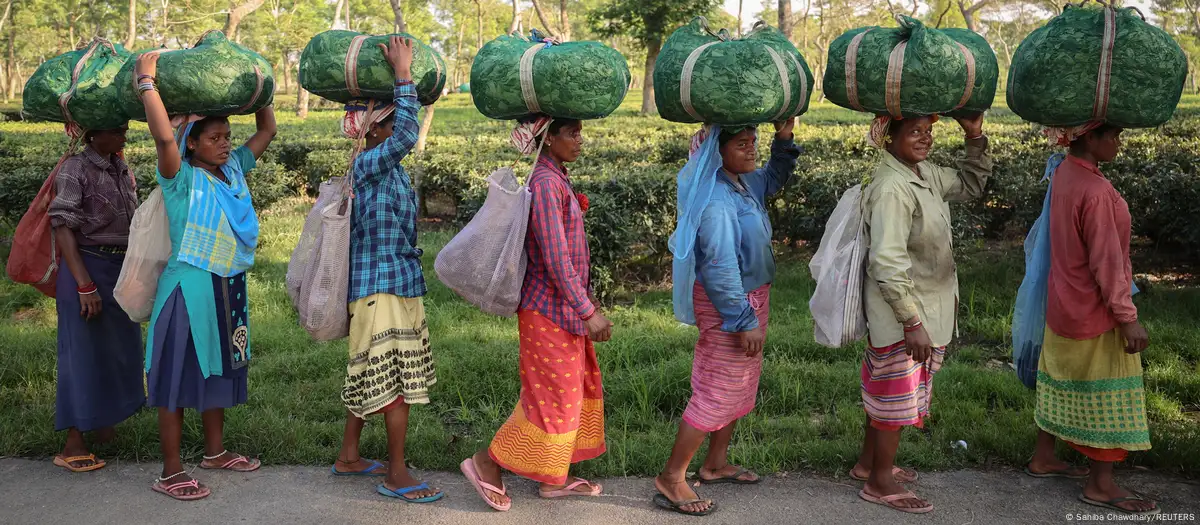
Battling the heat
Kamini Kurmi is a tea picker at a plantation in the northeastern Indian state of Assam. It's delicate work picking the tender leaves from the bushes. Her work requires a lot of patience — and plenty of fluids, as temperatures in the subtropical climate can climb to 40 degrees Celsius (104 degrees Fahrenheit). "When it's really hot, my head spins and my heart starts racing," Kurmi says.
Crops at risk
More and more frequently, sweltering temperatures and dry spells are causing the tender leaves to shrivel before they're picked. Brought on by climate change, extreme heat and periods of drought are threatening tea plantations across India. As a result, the nation's tea export industry is under mounting pressure. The global tea trade is estimated to be worth over $10 billion (€8.5 billion) a year.
Green gold
"Changes in temperature and rainfall patterns are no longer occasional anomalies — they are the new normal," said Rupanjali Deb Baruah, a scientist at the Tea Research Association in the Indian state of Assam. The Indian tea industry is famed for beverages such as Assam and Darjeeling tea, named after the regions they are harvested from.
Stress test in the lab
At the Tea Research Association in Jorhat, Assam, tea leaves are being tested for heat tolerance and electrolyte leakage. The monsoon, which is the region's main source of rainfall, brought 38% less rain than average this season. This has shortened the peak production season to just a few months, greatly reducing the window in which tea can be harvested.
Pests on the rise
Higher temperatures and reduced rainfall have also fuelled pest outbreaks. Discoloration, spots and hungry pests damage the delicate leaves, resulting in even lower crop yields and higher input costs.
Strict quality control
A worker pushes dried tea leaves into a processing machine before the product undergoes a final quality check and is packaged. Last year's drought diminshed crop yields, as farmers pruned their tea bushes early and introduced more pesticides to their fields. Both were added cost factors.
More pesticides
This plantation worker is spraying pesticides on a plantation in Tinsukia, Assam. While he is using an organic form of treatment, the use of chemical pesticides is also on the rise. Harmful substances, such as glyphosate, have been detected in tea varieties sold around the world, incuding in Germany. Still, pesticides appear to remain a necessity to increase harvest yields.
Growing scarce
India's export of high-quality tea is declining, while imports have almost doubled — reaching a record high of 45.3 million kilograms (99.9 million pounds) in 2024. With competitors such as Kenya also recording deficits, this development could cause global supply to shrink and ultimately drive up world market prices.